

Ultimate Guide to Event-Driven YouTube Strategy
YouTube creators can grow their channels by aligning content with trending events. Event-driven videos focus on moments when audience interest peaks - like holidays, sports finals, or product launches. This approach boosts engagement, attracts new viewers, and increases shares. Here's how to make it work:
- Plan Ahead: Create a yearly event calendar to identify key opportunities.
- Prioritize Smartly: Focus on events relevant to your audience, with high search demand and feasible production.
- Use Effective Formats: Live streams, Shorts, highlight reels, and Q&A sessions perform well for event-driven content.
- Engage Viewers: Build pre-event buzz, interact during live coverage, and repurpose content post-event.
- Track Metrics: Monitor watch time, audience retention, and click-through rates to refine your strategy.
Event-driven content transforms fleeting moments into long-term growth by leveraging audience interest at the right time.
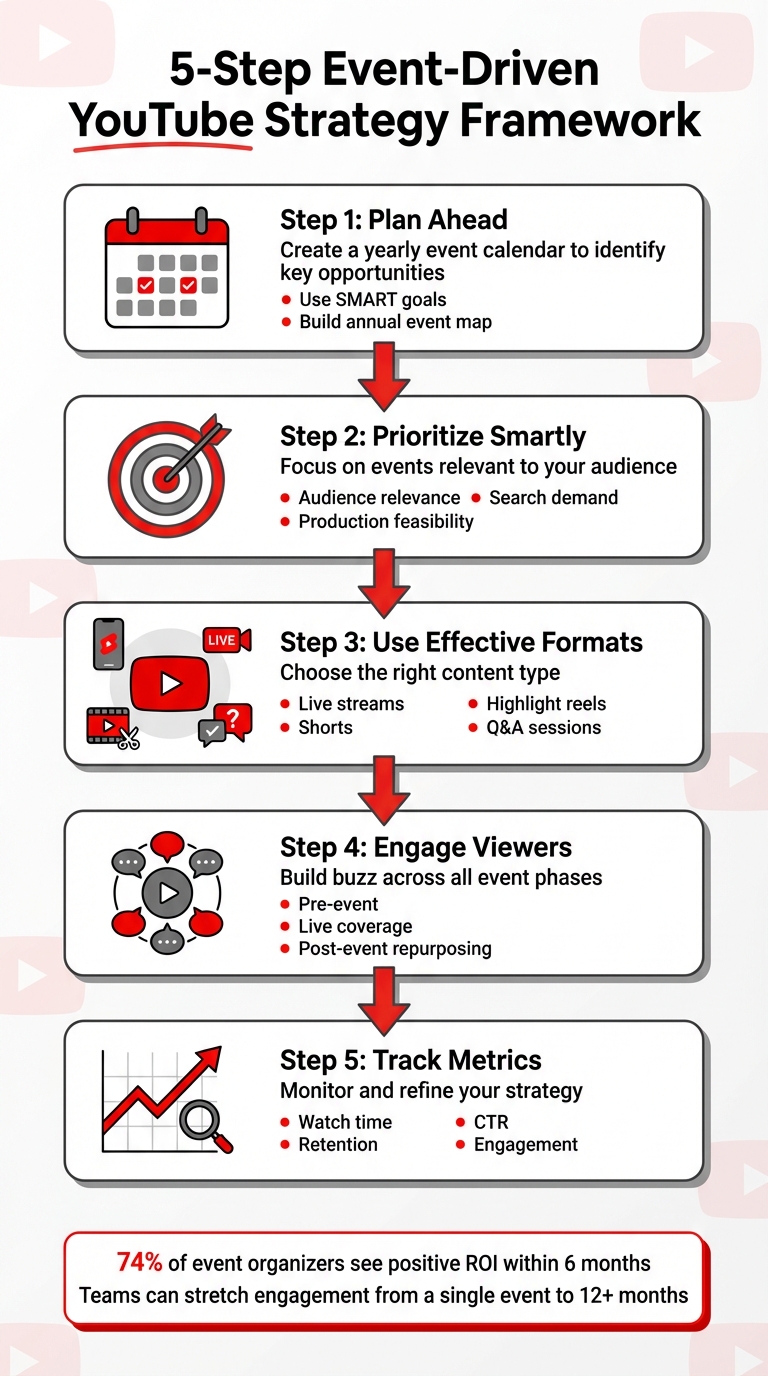
5-Step Event-Driven YouTube Strategy Framework
Planning Your Event-Driven YouTube Content Calendar
A well-organized content calendar can transform inconsistent uploads into a steady path toward growth. Start by setting SMART goals and digging into your audience's demographics, interests, challenges, and viewing habits. This groundwork ensures that the events you choose to highlight resonate with what your viewers truly care about.
Building an Annual Event Map
To put your SMART goals into action, begin by creating a yearly map of events. Outline all possible content opportunities by leveraging tools like YouTube's autocomplete and keyword research tools to discover what people are searching for around specific dates. Study your competitors to spot patterns in their event coverage and uncover potential gaps you can fill. Planning months or even a year ahead is ideal for predictable occasions such as holidays or major product launches. Include a mix of content styles to address both trending topics and long-term audience interests.
Prioritizing Events for Maximum Impact
Not every event deserves your attention. Narrow down your focus by assessing events based on three key factors: audience relevance, search demand, and production feasibility. Use Google Trends, filtered specifically for YouTube searches, to identify events that consistently generate spikes in interest. Ask yourself: Does this event matter to your audience? Can you create content that stands out? Do you have the resources to execute it effectively? Prioritize events that align with your channel's niche and give you the chance to offer something distinctive.
Once you've identified your priorities, integrate them into a detailed content calendar.
Structuring a Data-Driven Content Calendar
A well-structured calendar keeps your event-driven strategy aligned with your broader growth objectives. Track essential details like upload dates, video topics, production milestones, relevant keywords, and deadlines for scripting, filming, editing, thumbnail creation, and promotion. Strike a balance between evergreen content (which maintains value over time) and event-driven topics (which create short-term spikes in viewership) to ensure steady growth. Evergreen videos often continue to attract views long after they're published.
For event coverage, break it into three phases: pre-event buildup, real-time coverage, and post-event analysis. Consistency is key - YouTube's algorithm in 2025 rewards regular posting schedules, so stick to a steady rhythm even during periods packed with event-focused content.
Creating Event-Driven Content Formats
Once you've mapped out your event calendar, the next step is selecting video formats that resonate with your audience. Different events require different approaches, and choosing the right format can make all the difference in how your content performs. This phase connects your planning efforts to the creative execution that follows.
Proven Event-Driven Content Formats
- Live streams: Perfect for real-time coverage, live streams let you interact with viewers as the event unfolds.
- Highlight reels: These condensed videos capture key moments, offering a quick recap for those who missed the live experience.
- YouTube Shorts: Quick, vertical videos that tap into trending moments and improve discoverability.
- Explainer videos: Simplify complex event announcements or industry updates into easy-to-understand content.
- Q&A sessions: Address audience questions immediately after an event to deepen engagement.
- Behind-the-scenes content: Offer exclusive glimpses into the event to create a stronger connection with your audience.
Each format can drive engagement when paired with clear, attention-grabbing thumbnails and titles.
Using the Hero–Hub–Help Framework
The Hero–Hub–Help framework is a powerful way to organize your event content into three categories that work together to create a seamless experience:
- Help content: Addresses common search queries, such as tutorials or how-to guides, and stays relevant year-round.
- Hub content: Regularly scheduled videos, like weekly event roundups or episodic series, encourage viewers to subscribe and keep coming back.
- Hero content: These are your big-ticket videos - think major events like the Super Bowl or significant brand announcements. For Hero content, create a detailed programming calendar, release supporting videos ahead of the event to build excitement, and involve your audience to turn them into advocates.
As Think With Google explains:
"Your programming strategy should be articulated around three different types of content: help, hub and hero content, with each content category requiring a different type of activation."
Streamlining Content Production Workflows
Speed matters when it comes to event-driven content, and automation can handle up to 70% of your workflow. Start by mapping out your process from research to publication. Batch production is an effective strategy - set aside one or two days a month to film multiple videos, then schedule content for the next four to six weeks.
Leverage tools like AI and production templates to simplify tasks like idea generation, scriptwriting, and editing, cutting down on manual work. For example, in May 2025, educational YouTuber Sarah used tools like Notion and ChatGPT for planning, hired a virtual assistant for uploads, and relied on CapCut templates for Shorts. This approach helped her grow from 2,000 to 80,000 subscribers in just six months while producing three long-form videos and 10 Shorts each week.
While automation can save time, always review outputs to ensure your content stays true to your brand. By streamlining production, you’ll be better equipped to execute your event strategy efficiently - setting the stage for success in the next phase.
Executing Event Coverage on YouTube
Once you've outlined your formats and workflows, it's time to bring your strategy to life in three stages: building excitement before the event, keeping the audience engaged during the live broadcast, and creating lasting value after the event wraps up.
Pre-Event Preparation and Content Strategy
Start by scheduling your live streams well in advance. This gives you plenty of time for promotion and preparation. To get the buzz going, consider creating a "save-the-date" video or announcement that teases what viewers can expect.
Before publishing, make sure your video is optimized for discovery. Add relevant keywords to your title, description, and closed captions, using varied phrasing to increase visibility. Don’t forget to design a custom thumbnail - YouTube recommends a size of 1280 x 720 pixels. Use high-quality images and bold text to grab attention.
Test your setup by running an unlisted stream. This ensures your equipment is working properly and your internet connection is reliable. For smooth HD streaming, aim for an upload speed of at least 10 Mbps. Always have a backup plan, like spare equipment or a mobile hotspot, just in case. A simple script can also help you stay organized and keep the stream dynamic. When planning your timeline, be mindful of holidays or major industry events, and avoid posting new videos right before going live. This gives your audience time to engage with your most recent uploads.
Once your pre-event setup is solid, it’s time to focus on strategies to keep viewers engaged during the live broadcast.
Real-Time Event Coverage
YouTube’s algorithm gives live streams an extra boost with features like special notifications and badges, which help draw more viewers. Plus, live streams often see five times more engagement through real-time comments.
Kick off your live event with a warm welcome. Greet your viewers, let them know what’s coming up, and encourage interaction right from the start. To create urgency, use action-oriented language in your titles and descriptions - words like "LIVE", "NOW", or "TODAY" work well.
Assign a moderator to manage the chat. This person can filter out spam and respond to comments, freeing you up to focus on delivering great content. To make the experience even more interactive, use features like polls or Q&A sessions. Enable Super Chat and Super Stickers to let fans highlight messages and show support. Also, turn on the DVR function so latecomers can pause or rewind as needed.
Always record your live stream locally as a backup. And when the broadcast ends, use YouTube's Live Redirect feature to guide viewers to your next video or stream, keeping them engaged with your channel.
Once the live moment is over, shift gears to create post-event content that keeps the momentum going.
Post-Event Content for Long-Term Value
Turn your live coverage into content that keeps working for you. Time is of the essence - each day of delay can reduce engagement by about 20%. Start by creating highlight reels that showcase key moments. You can also compile full recordings into playlists or break down complex topics into shorter explainer videos.
These post-event videos don’t just tell your brand’s story - they also drive long-term engagement. YouTube’s algorithm rewards sustained interaction, which helps boost your content’s visibility over time. If your event included speaker presentations, consider turning them into standalone videos. Include a description of the talk and links to slides or other resources to drive traffic and give proper credit.
Repurpose your content across different formats to reach a broader audience. Pull out short clips for YouTube Shorts to highlight trending moments. Create tutorial videos to address common questions raised during the event. Or share behind-the-scenes footage for a more personal touch. This multi-format approach keeps your channel active and ensures your event’s impact lasts well beyond the live broadcast.
sbb-itb-08cadfc
Measuring and Optimizing Event-Driven Content Performance
Tracking the right metrics can turn your event-driven content into a consistent growth tool rather than a one-off effort. Platforms like YouTube offer robust analytics to help you understand how your audience interacts with your event coverage - from initial clicks to shares.
Key Metrics to Track for Event Content
Start by focusing on watch time, which reflects the total minutes viewers spend watching your videos. YouTube’s algorithm views higher watch time as a positive indicator for recommending your content. For live streams, keep an eye on peak concurrent viewers and average concurrent viewers to measure your ability to attract and maintain a live audience.
Another valuable metric is audience retention, which shows exactly when viewers stop watching. This data helps identify which moments keep your audience engaged and which might need rethinking. For example, live webinars typically see a 46% drop-off rate on average. Alongside this, monitor your impressions click-through rate (CTR) to gauge how well your thumbnails and titles are driving clicks.
To measure overall channel growth, track subscribers gained. Additionally, analyze traffic sources to understand which promotional efforts are bringing in the most views. Lastly, review engagement metrics like likes, comments, and shares to see how well your content resonates with your audience.
Using Data to Refine Future Event Strategies
Dive into past performance data to uncover trends that can shape your next content cycle. Compare metrics like watch time and audience retention across various event types to identify which formats consistently capture attention. For instance, if a specific type of event consistently outperforms others, it might be worth prioritizing similar content in your schedule.
Look closely at traffic sources to understand how viewers are finding your content. If a significant portion of views comes from organic searches rather than YouTube’s suggested videos, it might be time to fine-tune your SEO strategy or improve your thumbnail design. Similarly, analyzing engagement metrics - like comments and shares - can reveal which topics spark the most interest and discussions, offering clues for future content.
When planning event coverage, balance the relevance of the topic to your audience with its potential reach. Evaluating the competitive landscape for specific event topics can help you find opportunities where demand is high but competition is more manageable. Additionally, understanding what your audience is actively searching for ensures your content aligns with their interests.
Use these insights to strengthen your strategy and make your content even more impactful.
Using Outlier for Data-Driven Content Ideas
Once you've refined your approach using analytics, tools like Outlier can simplify the process of planning event-driven content.
Outlier analyzes competitor trends and delivers tailored video ideas for your channel. By reviewing the last 90 days of competitor activity, it highlights successful strategies and emerging trends you can adapt for your own event coverage. It even provides suggested titles, hooks, and confidence scores based on view velocity data - all within just two minutes.
This tool makes it easier to identify trending topics before they hit their peak and to determine which content angles resonate most with your audience. Instead of guessing, you can rely on actionable insights to replicate strategies that work and create event content that stands out.
Conclusion
Building a successful event-driven YouTube strategy takes thoughtful planning, disciplined execution, and constant refinement. For creators who truly understand their audience, events aren't just one-time opportunities - they're rich content hubs that keep delivering long after the initial buzz has faded.
Start by mapping out your yearly event calendar, focusing on moments that genuinely connect with your viewers. From there, align your content types to ensure your channel stays balanced and engaging over time. These choices lay the groundwork for achieving real, measurable outcomes.
Here's a key stat to keep in mind: 74% of event organizers report seeing a positive ROI within six months of their events. Plus, teams that systematically repurpose content can stretch engagement from a single event to over 12 months. That’s a huge window of opportunity.
But planning is only half the battle - execution is where it all comes together. Develop a strategy that covers every phase of the event: pre-event buzz, live coverage, and post-event follow-ups. For instance, 82% of organizers create video-on-demand content from their events, transforming fleeting moments into long-term assets.
Once your content is live, tracking and tweaking your approach is essential. Keep an eye on metrics like watch time, audience retention, click-through rates, and overall engagement. These numbers will guide your adjustments. Tools like Outlier can make this process easier by analyzing trends among competitors and offering personalized, data-driven video ideas.
The shift from covering events as isolated moments to viewing them as ongoing content opportunities is what sets growing channels apart. With the right strategy, every event can become a springboard for sustained growth, stronger connections with your audience, and results that build on themselves over time.
FAQs
How do I choose events that will engage my YouTube audience?
To create content that truly connects with your audience, begin by diving into YouTube Analytics. Look closely at metrics like age, location, and engagement rates to spot patterns in what your viewers enjoy. This helps you uncover the topics that click with them the most. Pair this data with tools like Google Trends to track trending events or themes that align with your audience’s interests. Make it a habit to revisit and refine your strategy using updated insights, ensuring your content remains fresh and engaging.
What are the best types of videos to engage viewers during event coverage?
To grab attention and keep viewers hooked during event coverage, focus on short-form vertical videos lasting between 6 and 20 seconds. Platforms like YouTube Shorts, Instagram Reels, and TikTok thrive on this format, as it’s not only quick to consume but also favored by platform algorithms, making it easier to boost visibility and keep audiences engaged.
You can also mix things up with content like real-time highlights, behind-the-scenes clips, and testimonial videos. These types of videos bring the event to life, offering a glimpse of the action, a touch of authenticity, and a chance to connect with your audience on a more personal level. A well-crafted highlight reel that captures the event’s key moments is another great way to showcase the energy and keep viewers coming back for more.
What’s the best way to measure the success of my event-driven YouTube content?
To gauge how well your event-driven YouTube content is performing, keep an eye on key engagement metrics such as views, watch time, average view duration, and audience retention. These indicators reveal how much interest your content generates and how long viewers stick around.
Don’t overlook click-through rates (CTR), social shares, and comments - these offer valuable insights into how your audience connects with your content. They can help you understand whether your videos are striking the right chord.
You should also monitor conversions and collect viewer feedback to assess if your videos are meeting their intended goals. Tools like YouTube Studio analytics are incredibly helpful for tracking these metrics and aligning them with your channel’s objectives, giving you a comprehensive view of your content’s success.


